It's a subzero morning. You turn on the kitchen faucet and get a trickle, or nothing. Or worse, you hear water running somewhere it shouldn't be. Here's what to do in the next ten minutes.
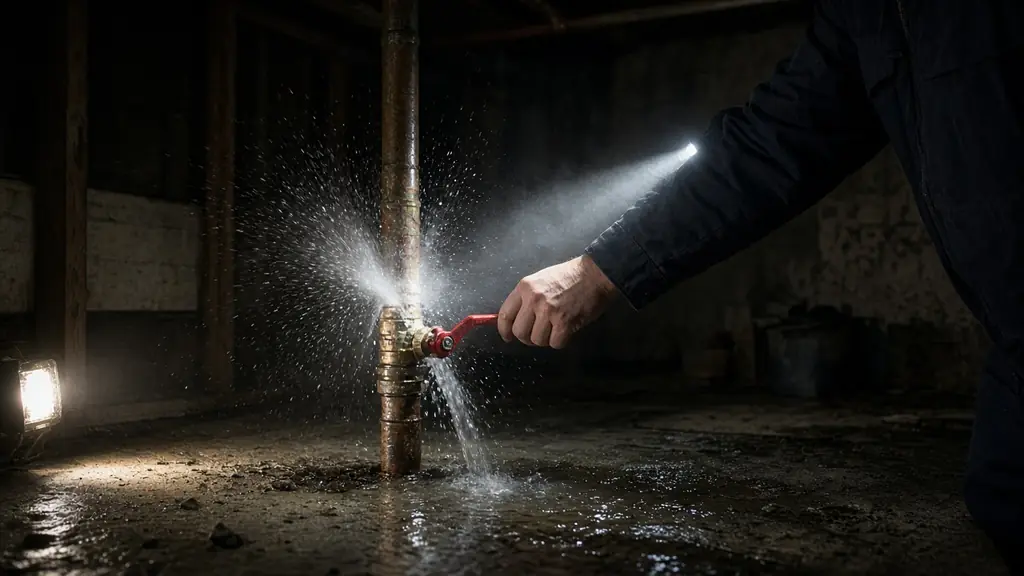
If water is spraying or pouring: shut off the main first
Don't hunt for the leak yet. Go straight to your main water shutoff. In most Winona homes it's in the basement, on the wall where the water line comes in through the floor or foundation, usually right next to the water meter. Turn the valve clockwise until it stops. If it's a lever, turn it so it sits crosswise to the pipe.
If you've never found yours, read How to shut off your main water valve now, before you need it.
Then:
- Turn off the water heater (set gas units to "pilot" or "vacation," and flip the breaker on electric ones). A heater running with no water coming in can be damaged.
- Open a faucet on the lowest floor to drain the pressure out of the lines.
- If water is near outlets, cords, or the electric panel, stay out of the wet area and shut off power to that part of the house if you can do it safely.
- Move what you can off the floor and start soaking up water. Take photos for insurance.
Then call a plumber.
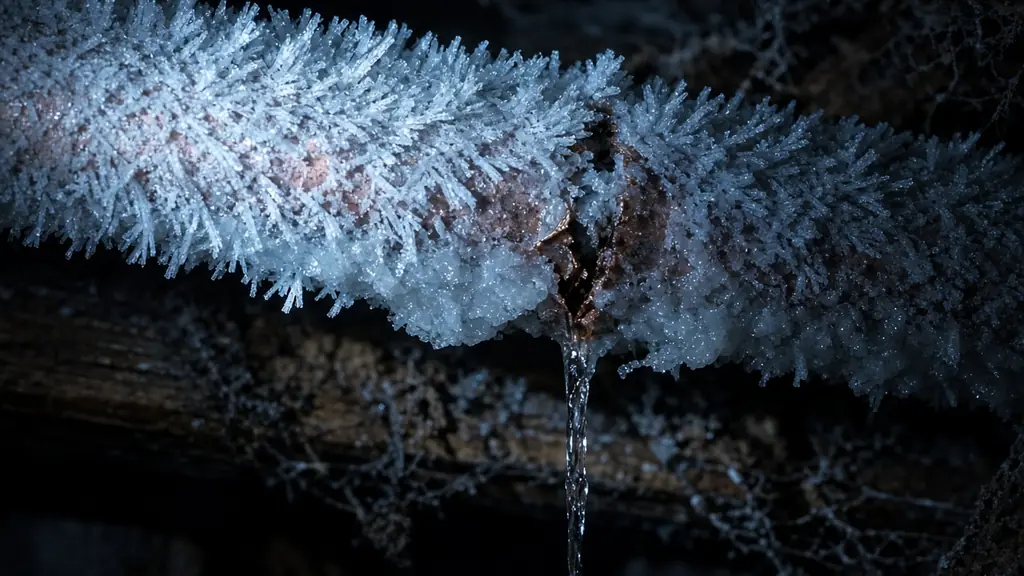
If a faucet only trickles: the pipe is probably frozen, not burst (yet)
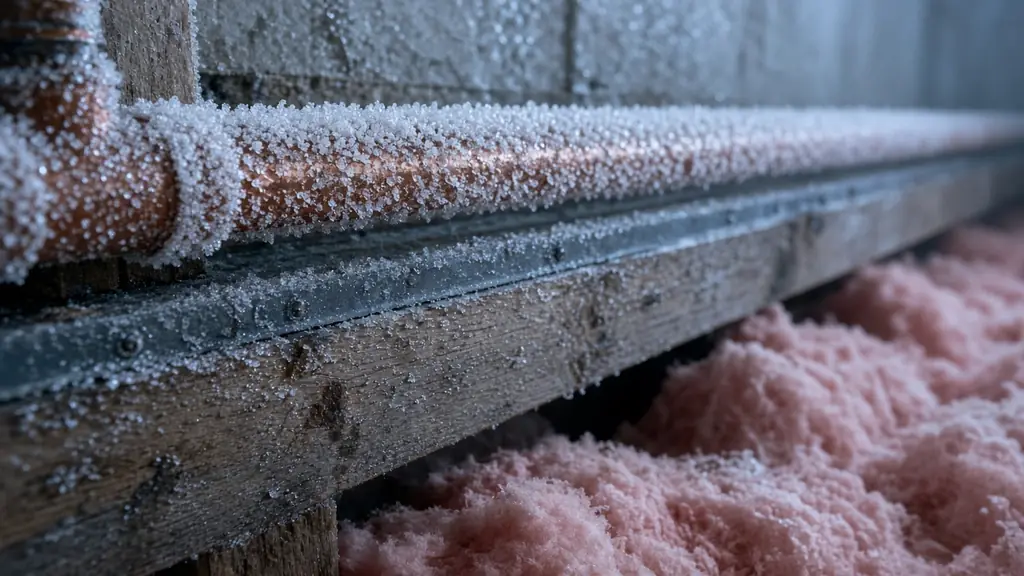
A frozen section can split when it thaws, so treat it carefully. The American Red Cross recommends:
- Keep the faucet open. As the ice melts, running water helps thaw the rest of it.
- Warm the frozen section with an electric heating pad, a hair dryer, a space heater kept well away from anything flammable, or towels soaked in hot water.
- Never use a torch, a propane or kerosene heater, a charcoal stove, or any open flame. That's how pipe thaws turn into house fires.
- Keep heating until full water pressure comes back, then check your other faucets. If one pipe froze, others may have too.
Call a plumber if you can't find the frozen spot, can't reach it, or it won't thaw.
When it's the line from the street
If no faucet in the house works and your neighbors have water, the frozen spot may be in the service line between the street and your house. In Winona, that line can be buried up to 8 feet deep, and property owners are responsible for the entire service line, according to the City of Winona. A frozen underground line is a job for a plumber with thawing equipment.
How to keep it from happening again
These come from Minnesota city utility guidance (Bloomington, Prior Lake, Brooklyn Center):
- On the coldest nights, open the cabinet doors under sinks on outside walls so house heat reaches the pipes.
- Keep the area where the water line comes in warm and clear, so cold air doesn't pool around it.
- Shut off and drain the lines to outside faucets before winter.
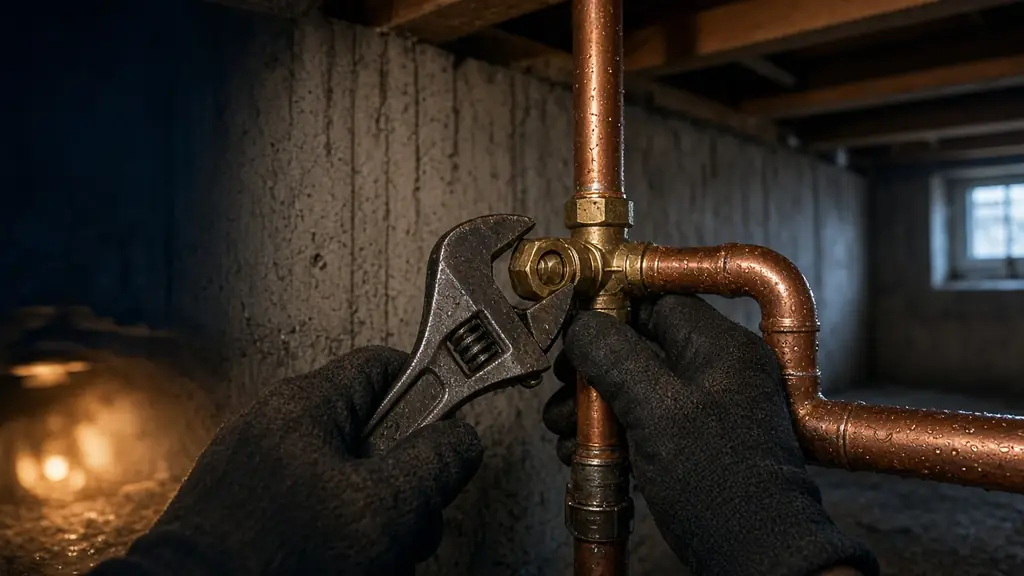
- Wrap foam insulation around pipes in cold spots like crawl spaces and garages.
- If your pipes have frozen before, check the cold water temperature at the faucet nearest where the line enters the house. Several Minnesota cities say that below 40°F, frost may be getting close to the service line. They suggest running a pencil-thin stream of cold water from that faucet, and making sure that sink drains well. You'll pay for the water, but it costs far less than thawing a frozen line.
- If you're leaving for a trip, keep the heat on and have someone check the house.
Need help now?
Backwater Plumbing & Water Conditioning is a licensed Minnesota plumber (MN Lic. PC150374) serving Winona and nearby towns. Call or text (763) 273-6421.
Sources
- American Red Cross, Preventing & Thawing Frozen Pipes: redcross.org
- City of Winona, Water Service Line Materials Inventory (service lines up to 8 ft deep, owner responsible for the whole line): winonamn.gov
- City of Bloomington MN, Prevent frozen water pipes, meters and sewers: bloomingtonmn.gov
- City of Prior Lake MN, Frozen Pipes (40°F check, pencil-width stream): priorlakemn.gov
- City of Brooklyn Center MN, Preventing Frozen Water Service Lines: brooklyncentermn.gov